Jamil King Ministries
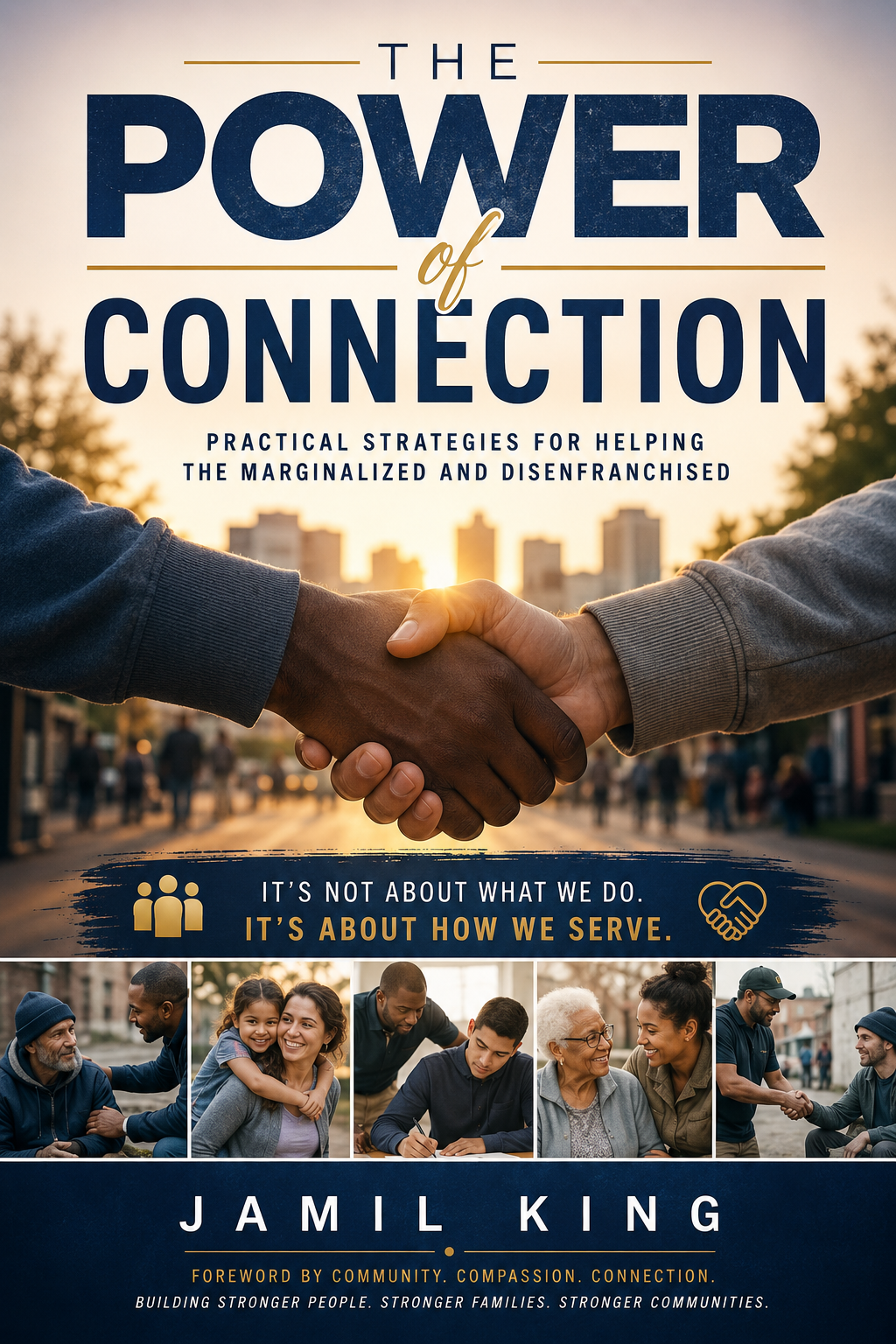
The Power of Connection
The Power of Connection
Couldn't load pickup availability
Practical Strategies for Helping the Marginalized and Disenfranchised
Foreword
Every community has people who feel forgotten.
Some are struggling financially. Some are isolated. Some have experienced rejection, failure, addiction, incarceration, loss, or disappointment. Others simply feel disconnected from the relationships and opportunities that many people take for granted.
For years, I believed that helping people primarily required resources. While resources are important, I have learned that transformation often begins somewhere else. It begins with connection.
People change when they feel seen.
People grow when they feel valued.
People flourish when they feel connected.
This book is about helping people reconnect with hope, purpose, opportunity, and community. It is about learning to see people beyond their circumstances and recognizing the potential that exists within every individual.
The principles in these pages are simple, but they have the power to change lives.
Connection before programs.
Service before self.
Relationships before resources.
These principles have the power to transform individuals, families, neighborhoods, and entire communities.
Introduction
Many people believe helping the marginalized begins with money, programs, buildings, or resources. While those things can be important, lasting transformation often begins with something much simpler: connection.
The greatest need in many communities is not a lack of resources but a lack of meaningful relationships. People who feel disconnected often struggle with loneliness, hopelessness, isolation, and a lack of opportunity. Before we can help people change their circumstances, we must first help them reconnect with others.
The question is not, “What can I get from this person?” The question is, “How can I serve this person?” When we approach people with a servant’s heart, trust begins to grow. Trust opens the door for influence, encouragement, opportunity, and lasting change.
Over the years, I have discovered that most transformation does not happen through a program. It happens through people. A caring conversation, a meaningful relationship, a mentor, a friend, a pastor, a teacher, a business owner, or a neighbor can often accomplish what money alone cannot.
The opposite of poverty is not always wealth. Often, the opposite of poverty is connection.
Connected people find opportunities. Connected people find encouragement. Connected people find mentors, resources, and support systems that help them navigate life’s challenges. When we help people reconnect with community, purpose, and healthy relationships, we help create an environment where transformation becomes possible.
This book is not about creating bigger programs. It is about creating deeper relationships.